by James Burns | Oct 30, 2018 | Dealing With Angry And Irate Parents Conference, Education, James Burns, Kids and Stress, Leadership, The Bully Proof Classroom, The Ramblings of a Dinosaur
 I played baseball in high school and college. I even played in an over thirty league back in the mid eighties. When my child Sarah was born in 1991, baseball wasn’t something I thought she would ever be interested in. But when she was about six, I took her over to the park to hit some baseballs. She picked up the balls after I hit them, and she got up to bat. She hit a few balls, and she even ran the bases.
Sarah had and still has athletic ability- good hand eye coordination, flexibility, strength and agility. When Sarah was seven, she came to me one day and said, “Hey dad can I play soccer?” “Sure,” I quickly responded. I went out and bought her a soccer ball, shin guards, and cleats. I signed her up for the recreational league in town. I must admit I was pretty enthused. We practiced kicking the ball in the backyard, and we were both getting pretty excited about her first game.
It was the Saturday of Sarah’s first game. She and I headed up to the soccer field. After some warm-up activities and a pep talk from the coach, the game started. To my surprise Sarah was in the starting line-up. Sarah ran up and down the field for the first ten minutes or so, and she finally had an opportunity to kick the ball. She took her first kick, missed the ball, and landed flat on her back. Sarah got up and came crying over to the sideline begging, “Don’t make me play anymore, Dad, I can’t do it.” Right then and there, Sarah refused to go back into the game.
When the game ended and we were walking to the car, Sarah continued to cry, “Don’t make me play, Dad, please, I don’t want to.”I mustered up all my courage and I said to her sternly, “You’re playing. You are playing. Now get in the car. On the way home, all I heard was a bunch of sniffling and whining. I didn’t have a very long ride home. I can tell you this, Sarah wore me out. I was emotionally exhausted by the time I arrived at home.
We pulled up into the driveway and I sat miserably in the car as I watched Sarah get out and walk into the house, sniffling and shaking as she walked through the front door. I sat stewing in the car and said to myself, “Who wants to play soccer anyway, dumb game.” I then attempted to further rationalize my thoughts by saying to myself, “Soccer’s for boys anyway.”I walked into the house, stood at the bottom of the stairs and yelled up the stairs, “SARAH.”She sniffled her way through a “Yeah, Dad.” I said, “Come down here.” After coming down the stairs, I said to her, “Look, Honey, you don’t have to play soccer if you don’t want to play. It’s OK with me.” Relief was all over Sarah’s face. She said, “Oh, thank you, Daddy!” Sarah gave me a big hug and kiss ran back upstairs.
Honestly, I felt like her hero. I was her knight in shining armor. I had just come through for her and given her exactly what she wanted. I was sure I had made the prudent decision. I didn’t even have to ask her mother’s opinion. I figured what’s the big deal since no harm was. I was content in the knowledge that I had allowed my six year old daughter to make her own decision. I have another daughter named Grace (Grace is six years younger than Sarah) who came to me when she was six years old and said, “Hey, Dad, can I play soccer?” I said, “Sure, honey.” The same routine started again, the shin guards, the cleats, the soccer ball, the practice, and finally the game. But this time, the outcome was much different. Grace ran enthusiastically up and down the field from one end to the other. She never got near enough to even touch the ball, but she had a great time. Grace came off the field with a look of absolute joy in her eyes and said to me, “Boy that was fun, Dad.”
She played the first season, and had a ball. She played the next season and really improved a lot. She wanted to score really badly, but didn’t have the opportunity. She still loved the game. To her, every game was an event, an outing that ended with a snack and a Gatorade, lunch, and a fun time spent with me.
While this was going on Sarah was into cheer leading, gymnastics, track, palates, and even a little weight lifting. She loved designer clothes, having her nails done, tanning, make-up, and just looking good. She watched her weight and understood that in order to look good, she had to spend a good deal of time exercising. She commented to me one time that some of her friends on her track team had less body fat than she did and that they could run faster than she could. It was just a passing comment but I remember her saying it, and I most definitely noticed that she was bothered by this. One day, Sarah and I drove over to the soccer field to pick Grace up from a soccer practice. Grace got into the car sweating. Her face was as red as a tomato. Sarah handed her a Gatorade and a snack. Grace just sat there contentedly guzzling her drink. Sarah looked back at Grace, then looked forward, looked back again at Grace again, and then stared straight at me. She said, “Hey, Dad, why didn’t you make me play soccer? Defensively, I said “I wanted you to play. Don’t you remember? You kicked the ball once, missed it, and fell on your head. Then you begged me not to make you play again. She answered me with, “SO? Why didn’t you make me?” Now I was the one who was starting to sweat. “You didn’t want to play! You wouldn’t let up until I agreed not to make you play,” I shot back Sarah then made a statement to me that I will never forget as long as I live. She said, “But, Dad, you’re supposed to be in charge.”
Where had I gone wrong seven years earlier? At the time, it seemed like the right thing to do was to give in to what Sarah wanted. But it turned out that I hadn’t done what she needed me to do. I had allowed a six year old to decide whether or not she wanted to play soccer. What had she really needed at the time? Sarah needed me to tell her that she was going to play soccer because I, as the parent, knew what was best for her and I wasn’t going to give her a way out. She wanted me to be in charge, not allow her to be in charge. I unknowingly had let her down.
When I teach my graduate courses, I always ask my adult students the following question: How many things did your parents let you get away with as a kid that you wish you had never gotten away with? I usually get lots of stunned looks from my students. Too often we allow our children to make choices and decisions that they have no business making. I see it all the time in supermarkets, stores, and malls. Parents giving in when their children demand they buy something or parents trying to coax their kids to stop crying or to stop running away from them. The children ignore their parents’ pleadings. Usually, the parents say something to their children like, “What do you want to do?” Honestly, who cares what they want, they’re three years old!
I’m not totally sure where this whole attitude has come from but I have my own theory that Dr. Benjamin Spock had a lot to do with it. Spock’s first book, Baby and Child Care” was first published in 1946 just in time for the baby boomer generation.In his book he spoke about feeding on demand, respecting your children, the need for flexibility, and the lack of the necessity to worry about spoiling. The paperback sold more than 50 million copies and was translated into 30 languages. Critics of Spock claimed that he was “the father of permissiveness.”
In later years, Spock claimed that he never changed his basic philosophy on child care and that it was imperative to respect children because they’re human beings and they deserve respect. But he seemed to retreat somewhat from his teachings when he made statements such as “I’ve always said ask for respect from your children, ask for cooperation, ask for politeness. Give your children firm leadership.” Years later, he became more moralistic and he said that parents should give their children strong values and encourage them to help others. This is only supposition but I hypothesize that Spock may have decided that he didn’t like what he saw in society and realized that he may have played a part in the screwing up of generations. In later editions of the book originally titled The Common Sense Book of Baby and Child Care, Dr. Spock stressed that children needed standards and that parents also had a right to respect. He stated in his book that parents were starting to become afraid of imposing on the child in any way.
I’m not claiming to be an expert on child rearing but I do know that if children are fed on demand, they will be demanding. If children are allowed to say anything they want, they will be disrespectful. If they are not held accountable, they will be irresponsible. And if there are no consequences for inappropriate behavior, they will be non-compliant. Parents today always ask…What can we do with our kids today? My question is…What are we going to do with these parents?
Once I relinquished my natural right as a parent to make decisions for my children, I was never truly able to reestablish my parental authority. From the moment that my daughter convinced me to allow her to make the choice not to play soccer, she learned she had the power to make basically every decision that came along in her life whether large or small. And the saddest part of all of this for me is that my daughter blames me because I wasn’t strong enough NOT to let her assume a role she was never designed to play in her own young life.
Dr. Spock has since passed away, and I think many of us looking for a new voice to offer us some solid advice to help us sort out the mess we are in today.
[ecwid_product id=”117169791″ display=”picture title price options addtobag” version=”2″ show_border=”1″ show_price_on_button=”1″ center_align=”1″]

by James Burns | Oct 28, 2018 | James Burns, Parents, Teachers, The Bully Proof Classroom, The Ramblings of a Dinosaur
Going to a Catholic grammar school for nine years had its benefits. We had to wear uniforms so there wasn’t any clothes competition. We went to church all the time so we got some formal spiritual training. You couldn’t even think of using profanity because you thought the nuns could read your mind and would find out what you were thinking. We learned good penmanship. We were respectful, compliant, and responsible.
The crazy thing is no one gave me a choice in any of these areas I was forced to do them. It wasn’t like the nun said to me you can go to church if you like, or why don’t you try to hold your pencil this way, or is that the way to speak to someone? If I didn’t do it the way it was supposed to be done, my blood stains would be on the floor.
As I look back at this experience, the one thing that I realize is that this type of education taught me something that no one talks about today and that’s self-control. The majority of the problems that a person faces in their life are related to a lack of self-control. Everybody either eats too much, drinks too much, spends too much, can’t control their temper, lusts after things that they can’t have like someone else’s spouse, and develops habits that they can’t break that could kill them or someone else like smoking or driving too fast. Now why does all this happen? Well, I never remember my parents or any teacher in my life saying to me the choice is yours: You can smoke or not. You can lose your temper or not. You can overeat or not.
Self-control is taught. If I did something that exhibited a lack of self-control, I got grabbed by someone and got reamed out or in the worst case scenario got clobbered. I was taught to wait on line, raise my hand, take my time, practice until I got it right, memorize, and I got drilled on skills that every-one knew were necessary for life long success. Look, musicians practice endless hours to perform a single piece of music. Students study instead of watch TV. Athletes devote years of their lives to prepare for an Olympic event that may last only a few minutes.
The concepts of self-control, delayed gratification and discipline seem so counter to our cultural values. We use our credit cards because we want things right away. We become impatient if we wait more than a few moments at a drive-through at McDonald’s. We eat ourselves into obesity and poor health because it feels good, with little consideration of the long-term consequences. Self-control should be graded in school and looked at as a quality necessary for success as an adult. If you or someone you know is having trouble with self-control I have a good friend named Sister Houlihan who still thinks self-control is important. She is 4 feet 8 inches tall and she can still make a grown man hold his pencil the right way!
[ecwid_product id=”117250099″ display=”picture title price options addtobag” version=”2″ show_border=”1″ show_price_on_button=”1″ center_align=”1″]
by James Burns | Oct 21, 2018 | James Burns, Respect, Responsibility, The Bully Proof Classroom, The Ramblings of a Dinosaur
Many years ago, a wonderful friend of mine asked me what the smallest part of the body is. I was very young and probably very stupid at the time. I responded with “Duh, a finger.” He commented to me, “No it’s the tongue.” He also said to me that although the tongue is the smallest part of the body, it can do the most damage. I never forgot the conversation that I had with him. Unfortunately he has since passed away and I miss him dearly. Even at 63 years old I could sure use a lot more of his advice and teaching today.
Our words can really do some damage. Damage sometimes that can be life long.Sometimes we don’t even know what were doing. Maybe we just were never taught how to keep quiet. Kids and adults can shoot their mouth off and think that they are being funny or that they’re standing up for themselves. In reality they may be doing more harm than good.
I was watching a baseball game very recently and watched one of the players go crazy over a called third strike. This is a grown man. He had to be restrained by three other players and the manager. Of course, he was thrown out of the game. He was also suspended for three games right in the middle of a pennant race. I guess he really showed them. What a dope.
We also like to have laughs at someone else’s expense. My philosophy is if we both aren’t laughing, it’s not funny. Kids today have a real problem with behavior like this. They say things, get a laugh and really hurt the feelings of another person. I don’t even think that they are aware of the fact that people are listening and not everyone is impressed with their wit. Plus, they are creating a negative image of themselves in the minds of other people.
That wonderful friend of mine who talked to me about the tongue was also full of illustrations and stories that were inspiring and instructional. He illustrated this societal problem with a true story that I always refer to as the “Deaf Boy Story” and it is worth sharing here.
There were two boys who were brothers. One of the boys was deaf. They had a friend who hung around with them all the time. This friend was the biggest jokester on two feet. He was always telling jokes or making fun of someone or something. One day, the three boys were headed out of the house. This jokester started to make fun of the way the deaf boy spoke. The deaf kid of course couldn’t hear,and the brother gave a half hearted laugh as they left the house. No harm no foul? The deaf kid didn’t hear so no one got hurt. No one else heard right? No one heard except the deaf kid’s father who was reading the paper in the den.
Let’s fast forward the tape. At the time of this incident, these two boys were sophomores in college. Two years went by and they both graduated with degrees in business administration. Both boys went on the job hunt. This jokester had an interview with a large insurance company. He had to go through one more phase of the hiring process which was to meet the vice – president of the company. Who do you think the vice-president was? The deaf kid’s father. Unfortunately the only perception he had of this young man was that this boy had made fun of his son! It cost the young man the job.
People hear and they watch, too. You never know when you are going to need someone or something. The things that are the greatest desires of our hearts are the things that will be withheld from us because of our past words or actions. Self-control is important and, if your tongue, a one ounce body part, has more control over you than you have over it, it will cost you when least expect it. You never know.
How To Teach Respect and Responsibility
Visit The Store
by James Burns | Oct 20, 2018 | James Burns, The Bully Proof Classroom
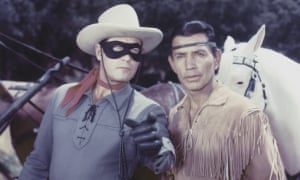 The legend has it that a posse of six members of the Texas Ranger Division pursuing a band of outlaws led by Bartholomew “Butch” Cavendish is betrayed by a civilian guide named Collins and is ambushed in a canyon named Bryant’s Gap. Later, an Indian stumbles onto the scene and discovers one ranger is barely alive, and he nurses the man back to health. The Indian recognizes the lone survivor as the man who saved his life when they both were children. The Indian gave the man named Reid a ring and the name Kemo Sabe, which means “trusty scout”. Among the Rangers killed was the survivor’s older brother, Daniel Reid, who was a captain in the Texas Rangers and the leader of the ambushed group. To conceal his identity and honor his fallen brother, Reid fashions a black domino mask using cloth from his late brother’s vest. To aid in the deception, the Indian digs a sixth grave and places at its head a cross bearing Reid’s name so that Cavendish and his gang would believe that all of the Rangers had been killed. The Indian’s name was Tonto and Reid the lone surviving ranger from the ambush became The Lone Ranger.
Taken in part from Wikipedia
Why is this story so important today? A radio and television series that ran in the late 1940’s through the mid 50’s that I didn’t even have an opportunity to watch, and really didn’t understand what the Lone Ranger represented until very recently while watching retro television. It’s fiction, but as I watched it I came to realize that this show was not just for its entertainment qualities but how it depicted what was right with the world and how one man could make a difference.
The Lone Ranger lived by a certain moral code. He was consistent, never changed, and even when he had to use his gun he never shot to kill but rather to disarm. He had the ability to disarm the perpetrator using both physical and verbal means.
He believed:
That to have a friend, a man must be one/ that all men are created equal and that everyone has within himself the power to make this a better world/ that God put the firewood there but that every man must gather and light it himself/ in being prepared physically, mentally, and morally and to fight when necessary for what is right/ that a man should make the most of what equipment he has/ that ‘this government, of the people, by the people and for the people’ shall live always/ that men should live by the rule of what is best for the greatest number/ that sooner or later …somewhere…somehow…we must settle with the world and make payment for what we have taken/ that all things change but truth, and that truth alone, lives on forever/ in his Creator, his country, and his fellow man.
We live in a world today that is so filled with intolerance, disrespect, irresponsibility and at times hatred that one may ask: why bother trying to use his standard to live by? I ask why not: Remember his name, The Lone Ranger, one man who was trying to make the world a better place. We need to teach our kids some of the qualities of the Lone Ranger and help them begin to believe that they have the ability to make changes in this world. The key to the 99 is the 1. One person can make a difference in this world and slowly but surely the tide begins to change. First in one circle and then in others until the masses believe that they all have the ability to make a difference.
Where do we start? Well let’s see what we can begin to do to change ourselves first, then how we can help others by using some of The Lone Ranger’s moral code.
To have a friend, a man must be one
The Lone Ranger had Tonto and they were inseparable. They stood back to back for what was right and just. They cared for each other and had a loyalty that is rarely seen today. They befriended others and took the time to cultivate relationships with the good guys and yes at times the bad guys as well. They worked to see the good in others and when someone was headed down the wrong path they tried to help them right their wrongs. They always reached out. Is this something that we do today or better yet do we teach our kids to help others who are the victims of bullying, abuse or alienation. To have a friend one must first show themselves to be friendly.
All men are created equal and that everyone has within himself the power to make this a better world
Where do we stand in the area of tolerance and prejudice? Do we allow the news to guide our thinking? Do we work to see the good in others or do we believe that one bad apple spoils the whole bunch? These are tough questions but things can easily be changed with the right words and attitudes regarding those who have weaknesses or who are different. Learn the art of disagreeing with the right attitude and teach your kids to do the same. We all have different beliefs but one’s belief doesn’t warrant disrespect, but rather understanding.
God put the firewood there but that every man must gather and light it himself
Are we responsible or do we blame others for our lot in life. Circumstances are what they are, whether it be upbringing, genetics, or some other force we all have the ability to be responsible for what we think, say, and do. How do we handle adversity? Do we help our children be resilient or do we allow them to fold under pressure. The skills are there for the taking we just have to light a match to throw some light on a problem that seems unsolvable.
Being prepared physically, mentally, and morally and to fight when necessary for what is right
How do we make decisions? Do we do it by the seat of our pants or are we prepared to stand on the principles of right and wrong. We have to be prepared when entering the battles of life and stand on what the facts are not what are emotions are telling us. When problems are presented to us our beliefs will determine our actions. My question is; what do you believe in?
A man should make the most of what equipment he has
How do we optimize our resources? Are we creative or do we give up at the smallest challenge? Are we down on ourselves because we are working at a job that seems to be going nowhere? Whatever our skills are we need to use them for the greater good. When confronted by an issue remember, no fear, be courageous and realize that you have the power, the love, and a sound mind to tackle anything.
This government, of the people, by the people and for the people’ shall live always
The government which has been around for what seems like forever will always live. The question is do we agree with it and the people running it. When I watch a campaign ad it seems like the candidate spends more time telling me what’s wrong with the other candidate then what their owns strengths are. So much time spent on negative talk and besmirching each other can grow long in the tooth. Yes, it probably will live forever; my question is how do we tolerate it when the candidate of our choice is not in office? Or better yet, how do we help our kids manage it when all they hear is negativity, and at times lies from the people who are in office.
Men should live by the rule of what is best for the greatest number
We have a tendency today to fear the minority. When I worked as a school administrator it seemed like one parental complaint could change an entire policy. Everyone isn’t always happy but for some reason we always try to make everyone happy. How do you handle it when you are in the minority and you break a law or violate an employment policy? Rules are in place for the majority and need to be adhered to. Tell your kids that and help them understand the reason for certain rules, laws, and policies.
Sooner or later…somewhere…somehow…we must settle with the world and make payment for what we have taken
Some call it Karma, some call it the universe, and some say what goes around comes around. Whatever it is life has a way of balancing things out. How do we know when payback might be coming? Your conscience will bother you. The world will give you time to right a wrong but if you don’t, its payback might be more than you can bear. If your conscience tells you to make things right with someone or to make restitution, do it regardless of how uncomfortable it might be. That uncomfortable feeling will seem like nothing when you compare it to what the world has to offer.
All things change but truth, and that truth alone, lives on forever
People lie and they know. There are liars all over the place. There are also folks who are known as embellishers. They seem to deal in hyperbole or always make the $100 dollars they made look like $1000. In my experience I have come across three types of liars: 1) The Situational Reactive liar. This guy will lie when it’s just as easy to tell the truth. His lying is based on the situation and the reaction he might get from his/her spouse or someone of consequence. 2) The Con Artist. This fellow could sell ice to an Eskimo or some you some undeveloped land in the backwoods of Virginia: a piece of land that everyone is just dying to buy, so you better pay for it now, sight unseen of course. 3) The Withholder. This is where it usually starts with kids. You ask them a question and the answer they give is about 90% true. They leave out the other 10% because it might incriminate them. My question here is which one are you, and what do you tell your kids when the cashier gives you too much change back, or when they ask you the speed limit when you know full well that you are speeding. Sure enough the truth does live forever and it will surely make you free.
The Lone Ranger believed in his Creator, his country, and his fellow man
The Lone Ranger believed and he didn’t need proof. Call it altruistic, call it faith, call it what you want, he believed. The belief in things that are unseen can be risky, but in the long run may be well worth it. Try putting some positive energy though into your country and your fellow man and you might find out that the world may not have changed, but you did. The outlook becomes brighter and you begin to develop a greater sense of the beauty of the world and begin to realize that the people in it are part of that beauty.
A character in a radio and TV show that was created with a purpose. Before Superman, Batman, and Spiderman the kids in the 40’s and 50’s had The Lone Ranger. No special powers, not from another planet, but a real flesh and blood superhero who offered some guidelines on how to live a life of character, treat others, and understand that one person can truly make a difference.
[ecwid_product id=”120396104″ display=”picture title price options addtobag” version=”2″ show_border=”1″ show_price_on_button=”1″ center_align=”1″]
by James Burns | Oct 19, 2018 | Behavior Management, James Burns, Respect, Responsibility, The Bully Proof Classroom, The Ramblings of a Dinosaur
Thank God for Nick at Night. You know the station that gives you shows like “Leave it To Beaver” or “Lassie.” I was watching“Leave it To Beaver the other day” and could not help but notice how all the adults were called Mr. and Mrs. No Ms. back then. Of course, Eddie Haskell was a bit of a phony when he addressed Beaver’s parents. “Hello, Mrs. Cleaver” or “Hello, Mr. Cleaver.” Then Eddie would run up to Wally’s room and refer to Wally’s dad as “Your old man.”
The question I asked myself is whatever happened to Mr. and Mrs.? Even when I worked as a principal the students called me Burns not Mr. Burns. I listen to my kids refer to their friends mom or dad as Colleen, Tony, Rich, or Barbara.
Lets face it…respect is just not there any more. Everyone thinks that the ground is level. Is anyone in charge out there or is a kid our peer? The less respect kids have for the casual adults they meet, the less respect they will have for teachers, police officers, and yea their employers.
Let’s see if we can turn the tide a little. Speak to the parents of your kids friends and call them Mr. or Mrs. especially in front of your kids. Let’s get our kids to show respect for folks that are older than they are and make them aware that the ground is not level, somebody is older and smarter than they are so they should be treated that way.
I have a dear friend who I have known for 25 years. He has four boys between the ages of 26 and 39. I have known them since they were teenagers and younger. They were calling me Mr. Burns up until 5 years ago. That is when I told them to call me Jim.

 I played baseball in high school and college. I even played in an over thirty league back in the mid eighties. When my child Sarah was born in 1991, baseball wasn’t something I thought she would ever be interested in. But when she was about six, I took her over to the park to hit some baseballs. She picked up the balls after I hit them, and she got up to bat. She hit a few balls, and she even ran the bases.