By David DeKok
October 2018



By David DeKok
October 2018
HARRISBURG, Pa. (Reuters) – Pennsylvania Governor Tom Wolf is expected to sign legislation on Friday raising the maximum penalty for fraternity hazing to a felony, carrying up to seven years in prison.

‘It was painful for me – it made me feel like I shouldn’t really be living’
Eleanor Busby Education Correspondent
Nearly half of school pupils have heard friends use language that is discriminatory or negative towards LGBT+ students, research finds. More than one in three (35 per cent) young people have been called gay or lesbian as an insult, according to the new survey from The Diana Award charity. The poll, of children aged between 11 and 16, found that nearly half of young people (43 per cent) have heard their friends use language that is discriminatory or negative towards being LGBT+.
For The Rest Of The Story Click Here
[ecwid_product id=”117241753″ display=”picture title price options addtobag” version=”2″ show_border=”1″ show_price_on_button=”1″ center_align=”1″]
 There is no question that change is very incremental. It happens very slowly. Before you know it you wonder how it happened. Most of the time change is good. Things like losing weight, quitting smoking and drinking, and breaking bad habits that affect a person’s health are changes we would all like to make. Some change though is not good and can happen so slowly that we don’t even see it coming. Malcolm Gladwell’s book “The Tipping Point” explains this phenomenon very clearly using the analogy of a scale that is filled with stones on one side and no stones on the other.
Everyday, week, or year, one stone is added to the empty side of the scale. Slowly the scale gets tipped in the other direction. The change is so small that it can’t be recognized. Mr. Gladwell uses this illustration to show that once the scale is tipped in the other direction, our societal problems can then grow to epidemic proportion.
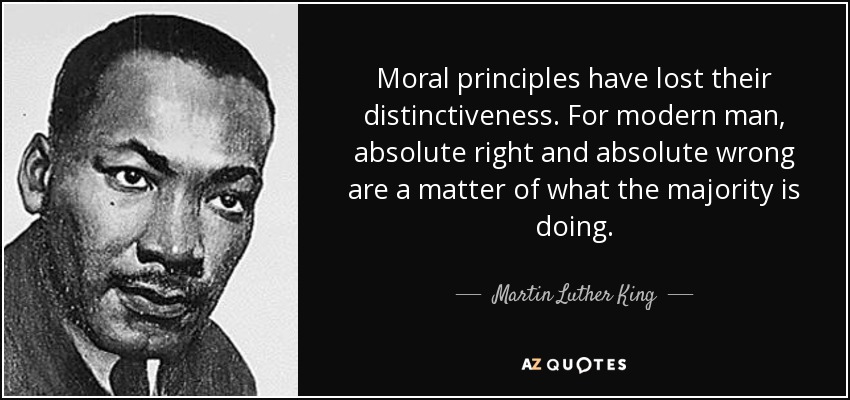
Certain universal principles were very common thirty to forty years ago. They were built into people and were taught by parents as a natural part of growing up. They are almost like the lost episodes of life. Slowly they have left us and we don’t think about them any longer as a society.
As a teacher, administrator, and observer in society, I have watched this happen. I have observed certain problems in our society go from being problems that only affect a small segment of the population to the point where they have become epidemics and affect huge numbers of people.
In order to deal with an epidemic, it has to be recognized. Once it is recognized we have to begin to treat it. Treating it requires a plan that will take time and has to start with our children. The change may be something that we as a society won’t see initially. It also may be something that we won’t see at all. The change may be something that will finally really happen with our great grandchildren.
Since the dawn of public education teachers and schools have focused on the academic achievement of students. All students were expected to leave school with basic reading writing and math skills. Some kids excelled and went on to institutions of higher learning, some were trained at a trade such as carpentry, or auto mechanics, and still others left school with those basics and worked at more labor related jobs such as factory or office work. Everyone who left secondary school did have the basics just at different levels. Every student may not have had the capacity to go to college but just about everyone finished school and had the ability to function in the real world. With the onslaught of state mandated testing in so many school districts throughout the country teachers are still pressured to ensure that students achieve but the landscape has changed and hitting the bull’s eye is far more difficult than it was say forty years ago. The bull’s eye is tough to hit because teachers are now being asked to hit a moving target. The target keeps moving because the levels of disrespect, and irresponsibility pervades our schools and basically you can’t hit something that won’t sit still, keep quiet, come prepared, stay motivated, and who really has taken no ownership for their own education.
Local and state boards persist though in their belief that success is based upon achievement not on effort and character. The faulty philosophies that have come out of some of our colleges that focuses more on methods of instruction rather than behavior management has both young and veteran teachers alike trying to figure out how to hit that moving target. In schools right now we don’t need one more test, or in-service that helps teacher’s understand how to teach to the test we need a comprehensive program that focuses squarely on student behavior management, teaching respect, and encouraging responsibility. Our young teachers who have been in the field for between three to five years may not know any different and are hounded daily regarding the academic achievement of students whose behavior is out of control, and veteran teachers who have done a good job of reading the tea leaves are planning for retirement because the work load is increasing to the point that it is becoming unmanageable. Our focus in education needs to be on steadying the target and improving student behavior, not on improving test scores. If we begin to focus on behavior, character, and effort rather than achievement test scores will naturally go up because we will begin to develop willing learners.
Colleges need to provide stronger training in the area of behavior management for future teachers and we need to provide more comprehensive training in the area of behavior management for teachers who are now in the field. Here are ten good reasons why:
The behavior in our schools has deteriorated to the point that we don’t worry about school violence we worry more about school shootings. We are forced to get everyone to the finish line without mastery of basic content. So many kids come into schools with negative learned behaviors that we are forced to develop conditions to support the behavior. (As an example, kids with ODD or ADHD were few and far between 40 years ago.) Schools would find different environments for the kids with severe behavior problems (Then about 10%) and send them down the path of the army, get a GED, or a trade school. Today there are so many kids with chronic behavior problems that are both conduct and clinical and you can’t throw out the entire twenty to thirty percent of the school population. These kids are no here to stay and they are going to make it tough for kids who want to learn to learn. So, if we want to teach the other seventy five to eighty percent we better figure out how to manage behavior problems.
Let’s face it years ago parents supported the school and dealt with their child’s misbehavior. Today we have to fight the kid, the parent, and at times city hall. In addition the behaviors that we dealt with forty years ago were of the garden variety like having a playground fight, or goofing off in class. Today the levels of disrespect, and irresponsibility, are at such high levels that younger teachers have begun to view some of the behaviors as the “new norm” and anytime there is the slightest improvement they fall all over the kid with praise causing the kid to feel good about himself for no apparent reason.
Teachers are trained to teach to the test. Even for content related testing during the year there is this unspoken fear of failing a kid. Most kids have an inflated view of their academic ability and don’t realize their shortcomings until later in life when grades are more meaningful. Good grades are nice, but mastery is better. Students move through grade after grade with unmastered skills and a lack the necessary prerequisites to learn new information. This produces frustration, anxiety, and tension resulting in behavior problems.
Ask any employer. They are more concerned about the attitude of their employee than whether or not they can do the job. They believe that they can always teach a person the skills on their job description, but they can’t teach the person how to get along. School is supposed to be a microcosm of society. Employers want their employee’s to be respectful, responsible, have a good attitude, can get along, show up, and are on time. Sound like school? If this is what employers want we should be teaching it; that is if we can find the time in the overly ambitious curriculum that is being used to help prime a kid to pass a test.
There are so many intergenerational dysfunctional problems in our families, schools, and in society in general that have been discussion forums in faculty rooms. No answers, just discussions. The topic of the day here is the inability to confront each other, a student, parent, or an issue, or maybe our own demons. Productive conflict is something that is taught it is not an innate skill. Teachers may have difficulty with conflict strictly based upon their own life imprint. It is a skill that needs to be taught to our student’s so they can have a disagreement and do it with the right attitude, and they can cooperate even though they may disagree. When this skill is not taught, power struggles are inevitable and relationships get strained. Some families don’t even talk to each other because of an unsettled youth conflict that became an adult conflict. Don’t worry once kids know this they’ll pass the test.
Kids are kids for a short period of time. Then they become adults; with the same crummy attitudes. Even the most intelligent of adults can have such arrogance that they are painful to be around. This is the other eighty percent of our school population. Knowledge without character produces this type of know it all mentality. They were once kids who did well in school but never developed the character in order to know how to make the best use of their intelligence.
As a society we just don’t have the same concern for each other as we once did. By this I am referring to the overall concern that a family has for the elderly couple up the street when there is a heavy snow fall, or helping someone with a dead battery, or bringing meals to a shut in. Adults don’t care as they once did and our kids care even less. There are too many students who stand around in school when someone is being bullied. But let’s always be sure that the kids pass the test.
Hurt people hurt people. Bullies come from dysfunctional families, are angry, and take out their anger on others. They made that decision around the age of five. Everyone knew there was something wrong but not enough was done to quell his/her misery. Early intervention didn’t happen and we ended up with a bully on our hands who interferes with the learning of others and creates an emotionally unsafe learning environment for everyone. Let’s take a test.
It’s not enough to get even anymore and have a fair fight and get it over with. Today revenge is the way kids level the ground. They just want don’t want a pound of flesh, they want a pound of your flesh and the flesh of five others. Victims who have been bullied don’t know how to fight back or have a productive conflict they digest the abuse and then act out when the time is right. Stop testing and start strengthening the victim. You will help them pass the test.
The smartest kids in the class could be the most deviant, and make the poorest choices. There are more kids today that can’t even make the smallest decision and can be led around by the nose by the wrong crowd. Smart doesn’t mean wise and at times even the smartest kids can lie, cheat, steal, and abuse others. Maybe even better than the average kid. There are all kinds of smarts and this kid is one dimensional, but he will pass the test.
[ecwid widgets=”productbrowser” default_category_id=”0″ default_product_id=”0″ minicart_layout=”MiniAttachToProductBrowser”]