by James Burns | Jan 27, 2018 | Anti Bullying Coaching and Resources, Bully Proof Classroom, James Burns

Independent people know how to do things on their own, and interdependent people know how to do things with the help of other people. Emotion-ally mature people know how to do both. They can function on their own but still understand that other people can be used as resources to help them solve some of life’s problems.
Parents are always concerned about sending their children off to live on their own. They start to worry around the time that their children get ready to go off to college. The biggest reason for the concern is because, in the parent’s’ minds, they feel that they didn’t teach their children enough to survive independent of them. The parents may have the desire to speak frequently on the phone with their children questioning them about their activities, their grades, who they’re hanging around with and even if they’re doing their school work.
This constant questioning is directly related to the parents’ uneasy feelings that they have about their children living away from home. This constant questioning will often be interpreted by the children as meddling and can even put a strain on their relationship with their parents. They may become so annoyed by their parents that they dread any conversation, and when they do talk to their parents it is only out of a basic obligation they believe they have.
Emotionally mature people understand the power of a positive relationship with their parents. People who are emotionally mature realize that they were once dependent on their parents for their care and for their needs. They want to become independent of their parents when they are teenagers and may end up in a few battles with their parents in their efforts to achieve a certain amount of independence. When they move into their late teens and early twenties, they realize that their parents are a powerful resource in their lives and that they still need their parents’ help to manage their lives as young adults. They talk to their parents frequently, ask their advice and work to involve them with the raising of their children. Emotionally mature people realize that the relationship that they have with their parents is really the first and probably the most important interdependent relationship that they will have in their lives.
In reality, the quality of the relationship that a person has with his or her parents will affect the quality of every other relationship that he or she will have in the future. In my case, I always had a problem dealing with my mother and couldn’t wait to get married so I could move out of my house to get away from her.
I was married when I was twenty four years old. I left my home and discovered that I was physically free and living an independent life on my own. The problem was that I wasn’t free emotionally. The inability on my part to form an interdependent relationship with my mother (my father had already passed away) left me riddled with guilt. That guilt affected every other relationship in my life. I never felt the freedom to ask my mother for help with anything, financial or otherwise. This attitude of mine of needing to do everything on my own and not needing people, including my mother, was not the very best for me.
In order to operate independently and interdependently, it is absolutely necessary to develop a positive relationship with our parent’s. Our parents should be our first and our best resource to help us understand how to work in an interdependent relationship. There are about seven billion people on the planet so the chances are really good that we will all be around people for the rest of our life. Some of these people will have personalities similar to our parents.
In order to work with others, a person has to learn how to work with the first two people in their life, their parents. There is no denying that our relationship with our parents is the first and most important interdependent relationship that a person will ever have.
by James Burns | Jan 26, 2018 | Criticism, James Burns, Principles, The Bully Proof Classroom
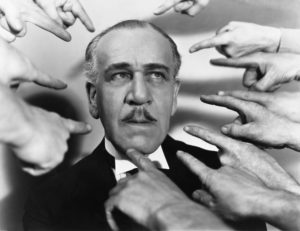
An emotionally mature person knows how to admit mistakes and can accept criticism with grace and humility. Emotionally mature people listen to criticism and ask themselves if what they are hearing is true. They do not get defensive or angry when someone doesn’t say what they want to hear. Often, the way a person is brought up plays a huge part in determining whether or not a they can handle criticism.
People who are placed on a pedestal when they are young will believe they can do no wrong and will have a difficult time when anyone criticizes them. At the other end of the spectrum, people who are raised in an environment where they were constantly criticized when they were young will also have a very tough time when anyone criticizes them. Often, people from both types of environments isolate themselves and ultimately have a real problem being around others for fear of hearing something that they don’t like.
I was brought up in a family where criticism was the rule, not the exception. My mother’s criticism had an extremely cruel edge to it as well. She was an expert at making each one of her children, including me, feel like a bad person. When I began my career as a teacher, I was twenty two years old. I was a special education teacher in a middle school in a inner city school in New Jersey. My class was made up of the toughest, most violent kids in the school. Their behavior was terrible and I had a tough time controlling the class. On one occasion very early in the school year, I was observed by the vice-principal. He came into my room unannounced and watched me teach for a full hour. My kids were not well behaved but I didn’t think they were as bad as they usually were.
About five days later, the vice-principal sat down with me to go over my performance evaluation. I was nervous since performance evaluations determined whether or not teachers get rehired.I knew very well that performance evaluations are designed to point out to the teacher some strength but mostly weaknesses that needed improvement. I knew I had to get myself ready for some criticism when during this conference. When the vice principal went over his findings with me, there wasn’t one positive remark in the evaluation. Every category was checked as either unsatisfactory or needs improvement. A mature reaction on my part would have been to engage my boss in a discussion so I could find out what he wanted me to do to improve. Instead, because of my knee-jerk reaction to any criticism whatsoever, my blood started to boil. I want you to understand that I knew my this was a fine administrator and a real gentleman. Knowing this, I should have realized that he was just doing his job and actually trying to help me. Unfortunately, that thought never entered my mind. Instead, I was having my immature, emotional reaction to him.
A day later, I went straight to the union representative and had him look at the evaluation. He immediately scheduled a meeting between himself, the principal, the vice principal and me. The principal of course supported the vice principal’s findings in the evaluation but he gave me a suggestion that actually leaked through my thick head. He told me to go over to another school and observe another class like mine and see if I could get some help. I scheduled time and went over to the other middle school in the district and started to observe a veteran teacher work with students who were as tough if not tougher than the students that I had in my class. This teacher had been in the district for many years and had developed so many effective techniques that he never really had any behavior problems. He was a kind, giving man and really took he under his wing. We became good friends. I learned from him and I became a better teacher.
The principal observed my classroom about four weeks later. This time there were positive things going on in my classroom. The kids being were pretty much on task and stayed in their seats. It actually looked like a classroom, not the circus. My new evaluation was great and assured me that my hard work was recognized. Even though I had had an immature reaction to the first performance evaluation, I had luckily listened to the one recommendation of the principal to visit another classroom. I started out very reactive but, with the help of others, finally realized there was a lot of truth in the criticism that had been included in that evaluation. It probably saved my job.
by James Burns | Jan 25, 2018 | Bully Proof Classroom, Character Qualities, Compliance
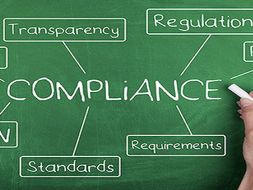
What does it mean to be compliant? Most people would say it means that you do what you’re told when you’re told to do it. That’s about right, but not quite. Emotionally mature people have the ability to do what they’re told, when they’re told to do it, with a good attitude.
In my years as an administrator and teacher, I observed many teachers and students doing what they were told, but what was missing was the good attitude. Although they complied with directives or instructions, they grumbled or cursed under their breath and definitely did not have a good attitude. Often they complained to co-teachers or fellow students while they were complying.
Mature people have the ability to cooperate even when they disagree. They don’t waste time complaining about what they have to do. They spend time getting the job done.
People with a poor attitude never give it their best when they do a job. They give a half hearted effort and are usually considered second rate students or employees. In contrast, compliant individuals give everything their best all the time and earn the confidence of their parents, teachers, and employers. Compliant people also know how to make correct appeals if something doesn’t sit quite right with them. They always look for clarifications or help when they have trouble getting something done.
As a young administrator, I was given the responsibility of issuing paychecks to the employees in my school. On one occasion, the checks arrived one day early. I was told by my superintendent not to issue the checks until the following day. A custodian, who already had been told that he wasn’t going to be rehired, asked me if he could have his paycheck early. I felt sorry for him especially because he was being let go. You have to understand the reason why he was being let go. This custodian was non-compliance personified. He argued no matter what he was told to do. When he did what he was told, he was miserable and he let you know it. My boss couldn’t stand him and rightly so because he was a terrible employee.
Well, I made the conscious decision to issue the check to him even though I knew I wasn’t doing what I had been told to do by my boss. I did this without asking permission. Of course I went against the directive that had been given to me. The next day was the last day of the school year as well as the last day this custodian was to work. He never came to work!
When I realized he hadn’t reported the custodian was not on the job, I became nervous. I had to report his absence to my boss. When I called my boss to tell of the custodian’s absence, my boss said, “This was the biggest reason why I didn’t want those paychecks issued. I held back all the pay-checks because I didn’t want him to get his. I knew if he got his paycheck he wouldn’t show up for work today. I’m so glad I told you not to issue those paychecks.”
As I was listening to my boss talk the beads of sweat were starting to form on my forehead. When he was finished talking, I then told him the bad news. Speaking slowly, I said, “I did issue him his paycheck.” My boss responded by asking me to come to his office in about ten minutes.
Driving to his office I was thinking…why didn’t I listen to my boss and do as you were told. To summarize the conversation, or more like it, the reaming out I got from my boss, he basically undressed me for not comply-ing with his directive. I felt about one inch tall while he was talking to me because I knew that if I had listened to him, I wouldn’t be sitting there being reprimand.
To make matters worse, I then had to go through the embarrassment of calling the custodian up and telling him he had to pay the school back the $85.00 he had basically “stolen” for a day’s work he didn’t do.
There was one other effect my decision had on me. In my next performance evaluation, my boss cited me for not following administrative directives. I wasn’t happy that there was something negative going into my personnel record but I also knew my boss was right. After this incident, I had to work doubly hard to win back my boss’s respect and trust.
A huge problem in society today is that everyone think they are entitled to a full explanation when they are told to do something. People in authority don’t always have the time or luxury to explain every directive they give. When today’s generation of parents give an explanation when they tell their child to do something, they are making a huge mistake. The next thing that happens is these children go to school and expect their teachers to give them an explanation or a reason for everything they tell their students to do.
If they don’t get their explanation which they think they are entitled to or if they disagree with the explanation, then the student develops a poor attitude and then often become non-compliant. Children and adults who are under the authority of their parents or bosses should realize that it is in their best interest to comply when they are told to do something.
Remember-the person in charge is there for a reason. They have their own valid reasons for telling us what to do and they don’t always have to tell us what those reasons are.
by James Burns | Jan 18, 2018 | Grooming, James Burns, Parents

Why did our parents stand the test of time 50 years ago and stay married, and manage money so well? Why have the last 3 generations suffered so much financial difficulty, and been involved in one divorce after another? We observed our parents being financially responsible, and we observed our parents remaining married. The problem is we observed, but we never learned. It’s almost like watching a car mechanic fix a car, but never learning how to fix it ourselves. Wisdom, wise decisions, wise behavior, needs to be learned. We needed to know why our parent’s did what they did and we needed to be shown how to do it.
If society is going to develop the wisdom, common sense, or street smarts it has to start with grooming the kids of today and giving them the instruction they need to deal with money and relationships. When you get right down to it there really isn’t much else left. The challenge is great because parental role models are not as wise today as they were in days past. Parents can’t be asking their children what they want to be when they grow up, they have to taught the best career choices and then pointed in that direction. Parents have to teach their children how to handle money at a young age and show them how to save and invest for the future. Parents have to stop thinking that they don’t have a say in terms of who their children choose as a marriage partner. They have to speak up; if they believe that who their son or daughter is dating is not good for them they need to instruct them about the qualities they believe are important in a life partner. Society believes after a certain point that kids know what they’re doing and they’ll be fine. Parents don’t want to interfere. They don’t want to ram something down their kid’s throats. If parents don’t ram something down their kid’s throats some else will. If society is going to become wise again, it will have to spend more time teaching, and less time watching. We can start to teach our kids now when their young, or wring our hands as they get older and wonder where we went wrong.
by James Burns | Jan 17, 2018 | Behavior Management, Bully Proof Classroom, Schools, Teachers
Let’s face it. No one likes a confrontation. Often, confrontations come out of the blue, and we can find ourselves in a very uncomfortable position where we need to quickly find the right words to defend ourselves. I’ve been a teacher since 1977, and I have experienced my fair share of unpleasant confrontations with students, parents, teachers, and even administrators. But the most difficult confrontations to deal with are those that occur in front of your class. These confrontations are not taking place out in the hallway between just the student and you as the teacher. They occur in plain view of every student in the room, and your students become an audience watching a drama unfold that has the potential to damage your future ability to teach in that classroom.
Here is a typical scenario where a confrontation is occurring in the classroom between you as a teacher and one of your students. You are in the middle of teaching a lesson at the high school level. One of your students walks in 15 minutes late. You say to the student, “Why are you late?” The student answers, “Don’t worry about it. It’s none of your business.” You quickly become angry and say, “It is my business because you are interrupting my class, and I don’t even want you here right now. Go get a pass from the office and then come back.” The student answers, “I’m not going anywhere.” The student then plops down at a desk.
At this point, you are in a catch 22 situation. If you let the student just stay in the room, you, by default, will communicate to that student and every other student in the class that they can get away with coming in late to the class. You will also lose the respect of your students because you put yourself on the battlefield and you couldn’t get off gracefully. On the other hand, if you continue demanding that the student leave, you will lose because the student has already made the decision to stay. You end up looking foolish either way.
The appropriate response in this scenario is the following. The student walks into the class 15 minutes late. The entire class is watching and looking at you to see your reaction. You let the student walk to his/her seat and sit down. You look at the student and then at the rest of the class and say, “I know he/she walked in late. And you’re all probably wondering what I’m going to do about it. The truth is I haven’t decided yet what I’m going to do about it. I’ll talk to him/her later and let him/her know the consequence. Right now, let’s get back to the lesson.” Using this technique will work, but it still is not the ideal way to avoid a confrontation in front of your class because you are really operating out of a crisis mode, and that becomes very tricky.
A much better approach is for you to learn techniques and strategies to prevent confrontations from occurring in the first place. This requires a proactive rather than a reactive approach to classroom management. Early in the school year you will identify the students that have the potential to be confrontational and cause disruptions in the classroom. Once you have identified potentially confrontational students, you must take proactive steps to avoid future misery.
A very effective strategy you can use to avoid confrontations is to develop positive relationships with these students. There are many ways to accomplish this. You must commit to making the time to have positive conversations with these students either before class starts, in the cafeteria, during passing time in the hallway, or even during school events that take place after regular school hours. But positive relationships are not built through one conversation. Here are some steps you can take. First, make a commitment to spend 3 uninterrupted minutes of your time each day for 8 to 10 days in a conversation with that student where you are talking about the student’s interests outside of academics. Show a sincere interest in any extracurricular activities the student is involved in. Ask the student about plans for college or job opportunities. You may want to share you own interests with the student as well to allow the student to view you as a whole person with many facets rather than just as a teacher. During this time, do not correct the student or try to persuade the student to change classroom behavior. This daily conversation must go on for a minimum of 8 to 10 days in a row, so that the student begins to develop a trust in the relationship.
There are other proactive strategies you as the teacher can use everyday to help you avoid confrontations in the classroom. You should stand at the entrance to your room and smile and say hello, good morning, or good afternoon to each and every student as he/she enters the room. You need to become more aware of keeping your facial expressions as well as the tone of your voice neutral. Learn not to roll your eyes, groan or sigh. Students who are confrontational have a sixth sense and can pick up negative energy from their teachers.
Another effective strategy you should use to avoid confrontations is to ignore some of the negative comments students make. You need to understand that when a student makes negative comments, the goal of that student is probably to start a confrontation with you. Therefore, the best approach is for you not to take the bait. When a student says in front of the whole class, “This class sucks,” you could say, “It might, but I still have to teach it to you.” When a student says, “I hate this class, you are the most boring teacher in the world,” you might respond, “You know, you may hate it, but other students may like it, so I have to keep teaching.” When a student yells out, “Whoever told you that you can teach,” you could answer, “That’s an interesting opinion. I’ll talk to you about that after class.”
Probably the most powerful tool a teacher can use to prevent confrontations is to be a fair person in the classroom. Many teachers develop the habit of showing favoritism in their classroom. When particular students are very well-behaved, it can become very difficult for teachers who like these students so much to mete out the same consequences to them that they impose on their most difficult and confrontational students. Students who are confrontational are always looking for a reason to start trouble with a teacher. Once they detect that a fellow student was let off the hook by a teacher for the same behavior that he/she was held accountable for, they will believe they have been treated unfairly and
then their behavior will become even more unmanageable and confrontational. Therefore, teachers must discipline their best behaved students in the same manner that they discipline their most difficult students. When everyone in the classroom observes the teacher being fair and not using favoritism, they will all develop greater trust and respect for the teacher, and that will result in fewer confrontations.