by James Burns | Feb 8, 2018 | Conduct or Clinical, James Burns, Respect

Kids who have conduct problems should not be confused with kids who have Oppositional Defiant Disorder. Kids with this disorder are lacking an important piece of their personality: a conscience. These kids say and do things and can justify and defend their position to a point where it almost makes sense to others. Pretty disturbing. This kid can, at times, make you believe that when they bullied someone, the victim deserved the treatment. They lack empathy and have little or no remorse for their actions. They are truly anti-social and everyday are moving closer to becoming the adult sociopaths that makes the news for committing cruel and bizarre acts in society. He/she needs to be helped right now. His actions need to be watched and documented. He/she needs a combination of consequence and compassion, with the goal of helping him/her develop a greater regard for the rights and privileges of others (respect). Make no mistake about it; this kid has the potential to be dangerous. Accept no excuses, keep a balanced approach (consequence and compassion), don’t feel sorry for him, and help him/her change what may already be made up in his/her mind.
Visit My Store
by James Burns | Feb 7, 2018 | Conduct or Clinical, James Burns, The Bully Proof Classroom
Visit My Store
Bullies and victims suffer from clinical issues all the time. Depression, anxiety, and mood swings all are part of the bully/ victim dynamic. As these issues become more and more obvious, the natural tendency of parents and educators is to lower their expectations and modify the school environment to reduce academic and behavioral pressure. This may not be the best idea. Kids who already feel less-than-adequate and are suffering from a low sense of self-worth don’t need to feel any less capable then they already do. So let’s try something different: make any modifications you need to help kids who have been identified as “clinically involved.” But, slowly increase responsibility over time. Get him/her to a point that when he/ she has completed an assignment, arrived to school on time, or confronted a bully by being brave for two minutes, he/she feels like it was done on their own. Lowering expectations may appear to be the best thing to do at the time, but understand, we need to prepare kids to function in the real world where modifications may not exist. Kids will always provide you with the evidence to support your belief, so start believing that they are capable and they might surprise you.
Buy – Is The Behavior Conduct or Clinical
by James Burns | Feb 2, 2018 | Bully Proof Classroom, James Burns
Trying to explain to a child, or even at times an adult, the reason “whys” or “why not’s” related to certain behaviors can at times can be frustrating (and with our own children can be frightening.). “Don’t drink and drive,” “don’t smoke,” “watch who you pick as a friend,” or “who you date” are all things that teachers and parents communicate to their students and their children. In school kids are always asking “Why do we have to do” something, or learn certain academic skills. Bullying behavior can have a lasting effect on those who experience social, emotional, or physical abuse at the hands of a bully. Why don’t kids and bullies in particular heed the warning of adults and just listen and stop saying and doing things that are just downright cruel? The reason: many of our children today were never taught to obey, so they don’t have a vision in terms of the long-range consequences for what they do and often what they say, and many times, they just don’t care. Consequences, I might add, that could affect them as an adult. Remember all we are looking for is a kid to do what he/she is told, when he/ she is told to do it. Three military men were walking across the huge flight deck of an aircraft carrier. Suddenly, a commanding officer yelled out to them, “drop!” Two of the men immediately fell on the deck. The third man turned around to see what was happening and was instantly killed by an incoming airplane. All three men heard the same word; however, only two of them understood what they heard and obeyed the command. Recognizing and immediately obeying the voice of the commanding officer proved to be a matter of life and death for these men. Help your students understand that there does not have to be a reason right now why they have to do what they are told. Hopefully the bully will change before his life is affected, or worse yet, the life of someone else.
by James Burns | Feb 1, 2018 | Presidents Day
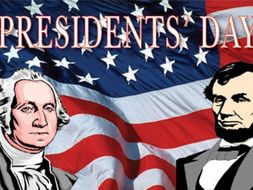
This lesson is designed to help students get a comprehensive understanding of who the presidents were/are, years served and who served with them as vice president. The students will work to memorize the required information and then fill in a worksheet identifying the key information. (Answer keys are provided) The students will then answer questions about some of the presidents identifying some important facts. The Students will have the opportunity to create their own fact sheet about a president of their choice. This is an excellent lessons for grades 5-12.
by James Burns | Feb 1, 2018 | Attention, James Burns, The Bully Proof Classroom
The brain is a wonderful organ and it can be programmed by us and by others. The words that people say to us and the things that are done to us can produce a private logic that can either be believed or stricken from our conscious mind as being just or untrue. Your Reticular Activating System (RAS) is the automatic mechanism inside your brain that brings relevant information to your attention. The RAS is a filter between the conscious mind and the subconscious mind. Let’s say you are sitting in your classroom and in the distance, you hear sirens. Your subconscious mind may say, “police, fire, first aid.” You are busy concentrating on something else, so your conscious mind focuses on the task at hand. But, then you notice that the sirens were from a fire truck and the truck pulls in front of the school. Your RAS immediately kicks in and those sirens that you heard earlier are now relevant to you. If you start to smell smoke well, now it really has your attention. A student may come to school with his/her conscious mind already programmed. He/ she may have let so many negative thoughts in that they may have become part of his/her belief system. The student may have been bullied at home or punished for small mistakes. His/ her siblings may have picked on him/her to the point that his RAS now allows only negative thoughts in. But worse yet, he/ she now believes them. Negative words and treatment are the things that get his/her attention and they begin to form his/her self-image. His thoughts become actions. The order of the day is to create a climate in your classroom that is kind, caring, respectful, and responsible. Think about the best teacher you’ve ever had, and how he/she got your attention. Keep a smile on your face and do your best to provide an equitable distribution of your passion and understanding to all of your students. Maybe we have to realize what gets our attention and how good it feels when a smile comes our way.
Learn More